
So you're ready to join the electric vehicle revolution, but you're staring at your electrical panel wondering if it can handle the extra load. Maybe you've also been eyeing those fancy smart panels that let you control everything from your phone. Which should you tackle first?
Here's the thing: you might not need to choose at all. The real question isn't which to install first: it's whether you actually need both.
Start with the Basics: Know Your Panel
Before you spend a dime, you need to understand what you're working with. Most Arizona homes built in the last 20 years have 200-amp panels, which is great news. But plenty of older homes, especially in established Phoenix neighborhoods, are still rocking 100-amp or even 60-amp panels.
The amp rating is usually printed right on your main breaker, but don't guess. A proper load calculation by a licensed electrician is the only way to know for sure what your home can handle. This isn't a DIY visual inspection: it requires analyzing your actual power usage patterns.
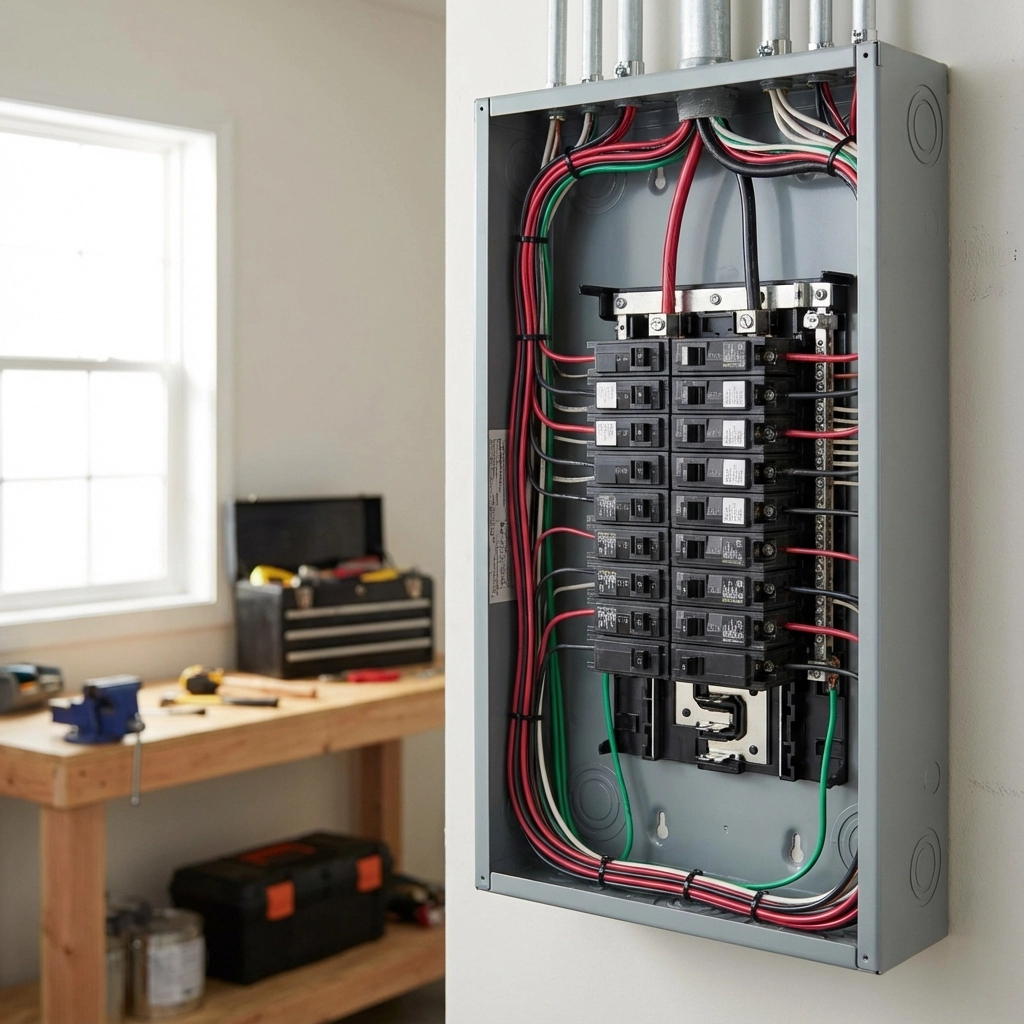
If You Have a 200-Amp Panel: You're Probably Good to Go
Good news: about 80% of homes with 200-amp service can handle an EV charger without any upgrades. These panels typically have enough capacity to run your air conditioning (crucial in Arizona), pool pump, and still charge your car overnight.
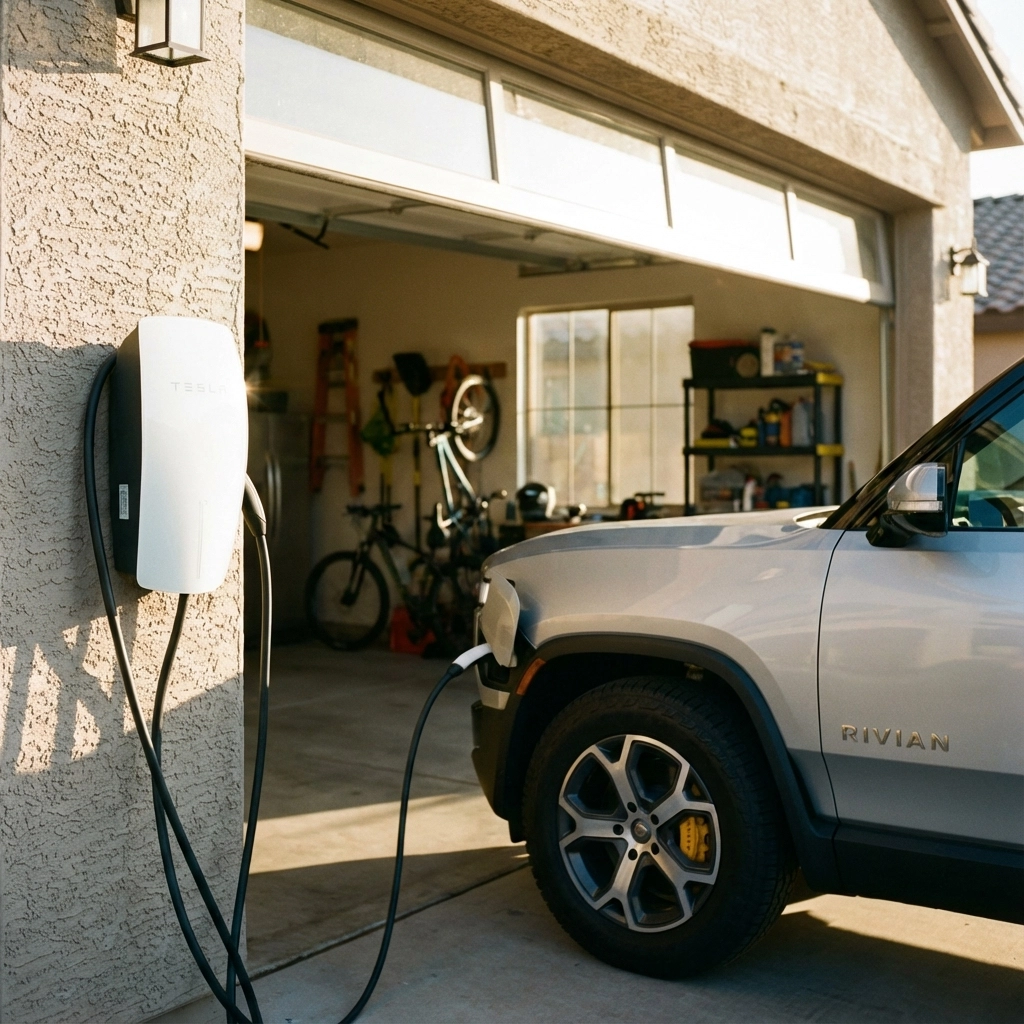
Install your EV charger first. Skip the smart panel upgrade unless you specifically want the bells and whistles of app-controlled circuits. A standard Level 2 charger will give you 25-40 miles of range per hour of charging, which is more than enough for most daily driving.
The installation is straightforward: run a new 240V circuit to your garage or carport, install the charging station, and you're done. Total cost typically runs $800-$1,500 depending on the distance from your panel.
If You Have a 100-Amp Panel: Get Creative First
Here's where it gets interesting. Your 100-amp panel might be able to handle an EV charger, but it'll need some help managing the load. Before jumping to an expensive panel upgrade, consider these alternatives:
Option 1: Load Management Device
Install a load management system first. These smart devices monitor your home's real-time power consumption and automatically dial down your EV charging when other major appliances kick on. Your air conditioner starts up? The charger temporarily reduces power. AC turns off? Full charging speed resumes.
This setup costs around $1,600-$2,400 total and is completely code-compliant. You still get full overnight charging: it just adapts to your home's power needs throughout the day.
Option 2: Smart EV Charger
Some newer EV chargers have built-in load management features. They connect to your home's electrical system and automatically adjust charging rates based on available capacity. This can be more elegant than a separate load management device, though slightly more expensive.
Option 3: Smart Panel Upgrade
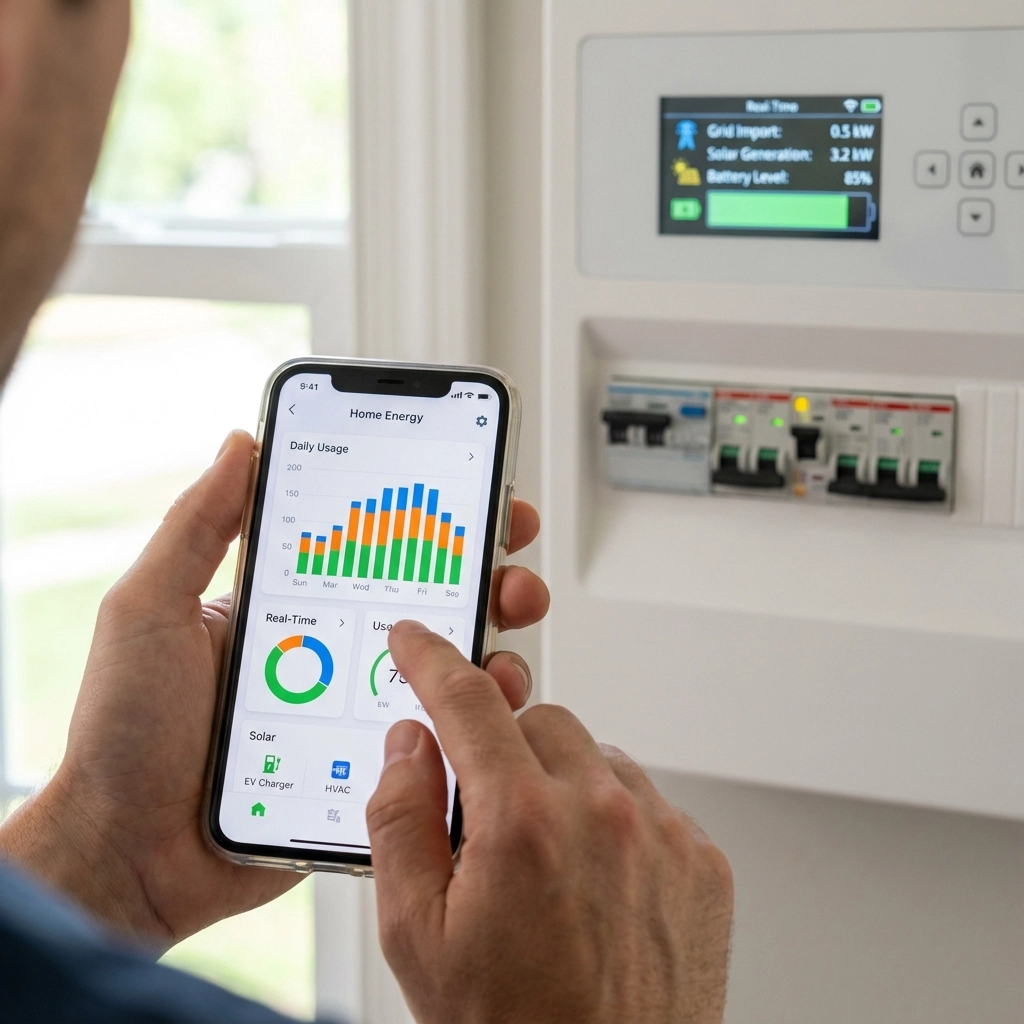
If you want the full experience: granular control over every circuit, real-time energy monitoring, and future-proofing: a smart panel upgrade makes sense. These typically cost $3,500-$6,000 but give you EV charging capacity plus the ability to manage your entire home's electrical usage from your smartphone.
If You Have a 60-Amp Panel: Time for an Upgrade
Let's be honest: if your home has 60-amp service, you're overdue for an upgrade regardless of the EV charger. These older panels were designed for homes without central air, multiple large appliances, and modern electrical loads.
Upgrade your panel first. Skip the half-measures and go straight to a new 200-amp panel. While you're at it, consider jumping to a smart panel if the price difference isn't too steep. You'll need the electrical work anyway, and the incremental cost for smart features might be worth it.
The Arizona Factor: Heat Changes Everything
Living in Phoenix adds a wrinkle to this decision. Our brutal summers mean your air conditioning runs constantly, which affects your available electrical capacity. A load calculation done in March might look very different from one done in July.
If you're on the borderline for capacity, lean toward installing load management first. Arizona's time-of-use electricity rates also make smart charging more valuable here: you can set your car to charge during off-peak hours when electricity is cheapest.
When to Do Both at Once
Sometimes it makes sense to tackle both projects simultaneously:
New home construction: If you're building new, wire for both the EV charger and upgrade to a smart panel from the start. The incremental cost is minimal when the walls are open.
Major electrical work: Already planning a panel upgrade? Add the EV charger to the project. Running the circuit is cheapest when your electrician is already on-site.
Future-proofing: Planning to buy a second EV or add solar panels? A smart panel with EV charging gives you flexibility for future additions.
Technology enthusiast: If you love controlling everything from your phone and want detailed energy monitoring, the smart panel upgrade enhances your EV charging experience.
Cost Reality Check
Let's talk numbers. In the Phoenix area, here's what you're typically looking at:
- EV charger installation (200-amp panel): $800-$1,500
- Load management device + EV charger: $1,600-$2,400
- Smart panel upgrade: $3,500-$6,000
- Full panel upgrade (60-amp to 200-amp): $2,500-$4,500
Load management systems cost roughly half what a panel upgrade runs, making them the smart financial choice for most 100-amp homes.
Making the Decision
Here's your decision tree: Start with a load calculation. If you have capacity, install your EV charger and call it done. If you're short on capacity, try load management before jumping to a full panel upgrade. Only upgrade to a smart panel if you specifically want the advanced features, not just to accommodate EV charging.
Most homeowners overthink this decision. The majority of Arizona homes can handle EV charging with minimal modifications. Don't let perfect be the enemy of good: start charging your EV sooner rather than later.
The Bottom Line
Your electrical panel doesn't have to be perfect to handle EV charging. Modern load management technology gives you options that didn't exist even five years ago. Whether you install an EV charger first, upgrade your panel first, or do both at once depends on your specific situation, budget, and timeline.
The key is working with electricians who understand both EV charging requirements and Arizona's unique electrical challenges. At Electrical Team 6, we've been helping Phoenix homeowners navigate exactly these decisions, ensuring you get the right solution for your home and budget. Get in touch with us for a proper load calculation and honest advice about what your home actually needs.
Ready to start your EV charging journey? Let's figure out the best path forward for your specific situation.